
The foundation of modern knowledge about the effects of lactobacilli and probiotics was laid at the beginning of the 20th century by the biologist Elias Metschnikoff.



The foundation of modern knowledge about the effects of lactobacilli and probiotics was laid at the beginning of the 20th century by the biologist Elias Metschnikoff.
Metchnikoff investigated in detail why the measured life expectancy of the Bulgarian rural population was statistically higher than that of other countries. He found his answer in the daily consumption of fermented dairy products and other lactic acid products.
These products are based on Lactobacillus bulgaricus.
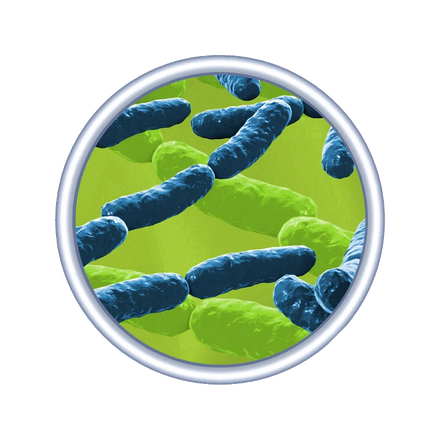
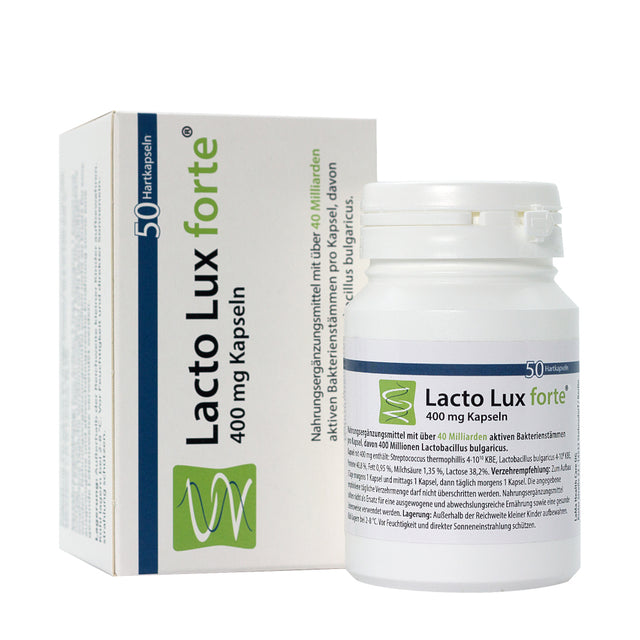
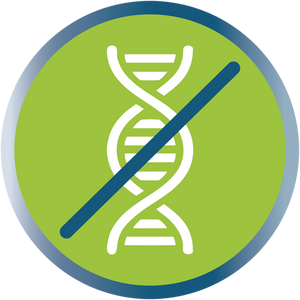
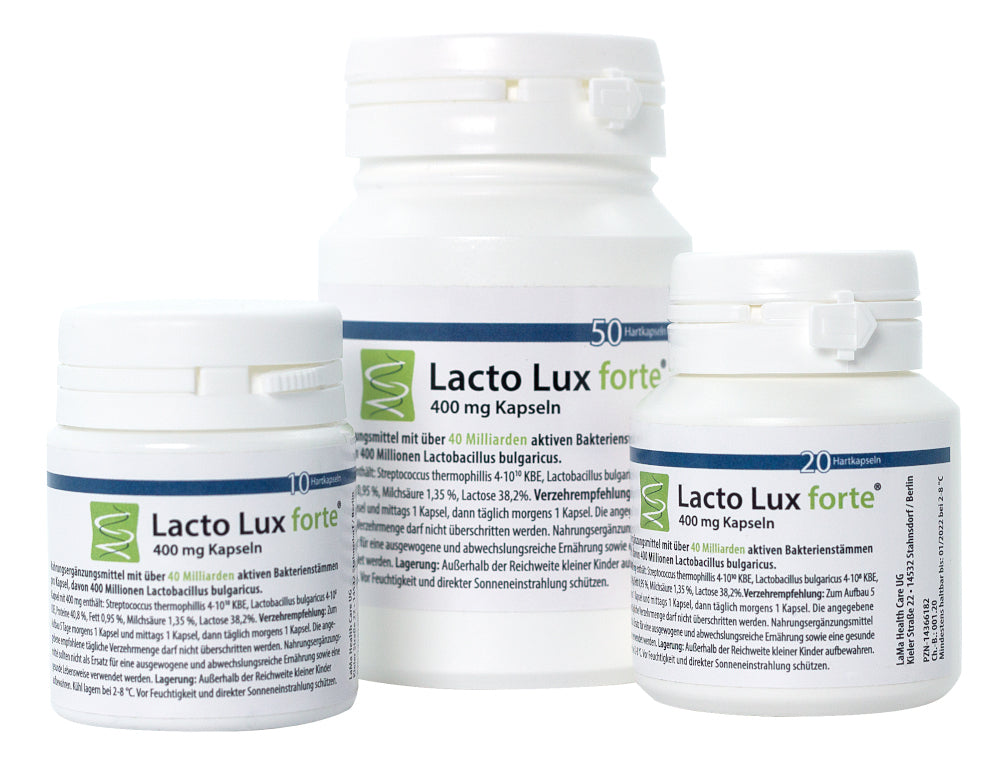
Lacto Lux forte® contains over 40 billion active bacterial strains per capsule, with genetically unaltered strains of Lactobacillus delbrueckii subsp. bulgaricus.
The coordinated bacterial cultures help each other to multiply.
Holistic effect: for skin, hair, nails, normal function of the gastrointestinal tract, immune system and metabolism









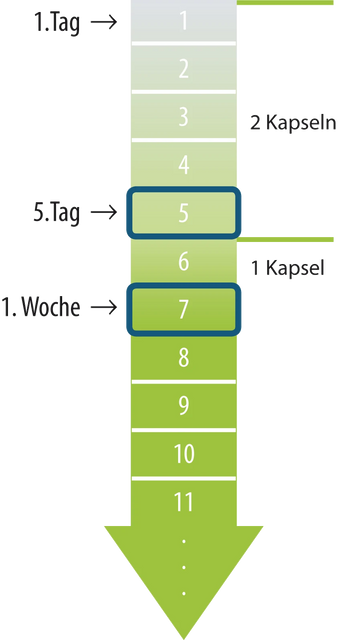
Lactobacillus bulgaricus is a bacterium that is normally found in your gut. It is considered a "good" type of bacteria and is present in dairy products. The chemical reactions triggered by fermentation cause milk proteins to coagulate, or clump together. This creates the thick, pudding-like texture of yogurt.
The human gastrointestinal tract, or intestines, is populated by beneficial bacteria called probiotics, which chemically convert sugars and other carbohydrates into acids. This acidic environment inhibits the growth of unhealthy bacteria that cause disease. Lactobacillus bulgaricus is a transient probiotic. It is not permanently present in the intestines, but it has a positive effect on the intestinal environment as it passes through the gastrointestinal tract.
Not all microorganisms are created equal. This is precisely the difference between Bulgarian and "normal" German refrigerated yogurt. In Bulgaria, it's Lactobacillus bulgaricus that thickens traditional yogurt, as it does in Greece and Turkey. In Western Europe, it's a rarity. Bulgaria has even established an institute specifically to cultivate these original Bulgarian strains of bacteria in order to preserve their purity.
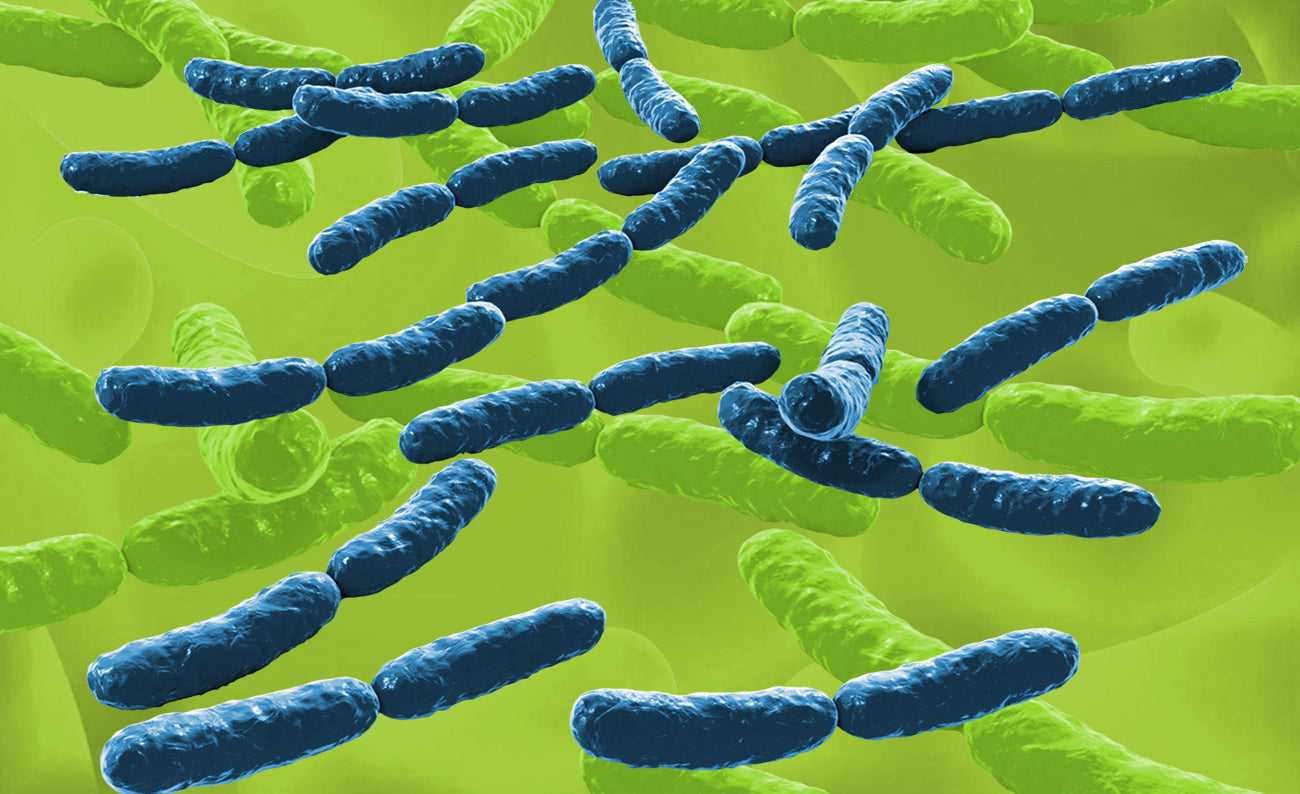
Der Motor des Lebens
Unser Darm ist so etwas wie der Motor unseres Körpers. Wenn er nicht rund läuft, kann sich das auf unser gesamtes Wohlbefinden auswirken. Wie gut es unserem Darm geht, hängt dabei stark von unserem Lebensstil ab. In der heutigen Zeit erschweren vor allem ein Überangebot an industriell hergestellten Lebensmitteln und verschiedene Umwelteinflüsse die Pflege einer gesunden Darmflora (Mikrobiom).
Viele Autorinnen und Autoren sowie Wissenschaftler – zum Beispiel Giulia Enders („Darm mit Charme“) oder Bas Kast („Der Ernährungskompass“) – beschäftigen sich seit Jahren intensiv mit diesem Thema und zeigen hilfreiche Ansätze auf, um die Darmflora zu unterstützen. Besonders der Dickdarm spielt dabei eine zentrale Rolle: Er ist mit vielen Billionen Mikroorganismen besiedelt, die dabei helfen, Nähr- und Vitalstoffe aus der Nahrung für den Körper verfügbar zu machen. Leider kann dieser Prozess durch unterschiedliche Faktoren aus dem Gleichgewicht geraten – was sich unter anderem auf die Entgiftung und die Aufnahme wichtiger Nährstoffe auswirken kann.
Ein abwechslungsreicher Speiseplan, regelmäßige Bewegung und möglichst wenig Dauerstress können dazu beitragen, die Darmflora in Balance zu halten.
Antibiotika können die Darmflora belasten, weil sie nicht zwischen „guten“ und „unerwünschten“ Bakterien unterscheiden – dadurch können auch nützliche Darmbakterien reduziert werden. Auch unsere Ernährung hat großen Einfluss: Zu wenig Ballaststoffe, viele tierische Fette und Eiweiße sowie Zusatzstoffe wie Emulgatoren und Konservierungsstoffe können sich negativ auswirken. Zusätzlich spielen psychische Faktoren, zum Beispiel Stress, eine Rolle: In solchen Phasen werden erwünschte Lactobacillen oft weniger, sodass sich unerwünschte Keime leichter ausbreiten können.
Eine stabile Darmflora ist wichtig, damit Vitamine und Nährstoffe aus der Nahrung gut aufgenommen werden können. Darüber hinaus unterstützt sie den Körper beim Ausfiltern von Giftstoffen, bei der Bildung bestimmter Fettsäuren, die wir nicht direkt über die Nahrung aufnehmen, und bei der „Aufräumarbeit“ im Darm – etwa beim Abbau von Nahrungsresten.
Viele dieser Aufgaben kann die Darmflora besonders gut erfüllen, wenn sie täglich unterstützt wird – zum Beispiel durch eine Versorgung mit möglichst vielen aktiven Darmbakterien wie Lactobacillen, Enterokokken und Bifidobakterien.


